February 8, 2022
What Is Esthetics?
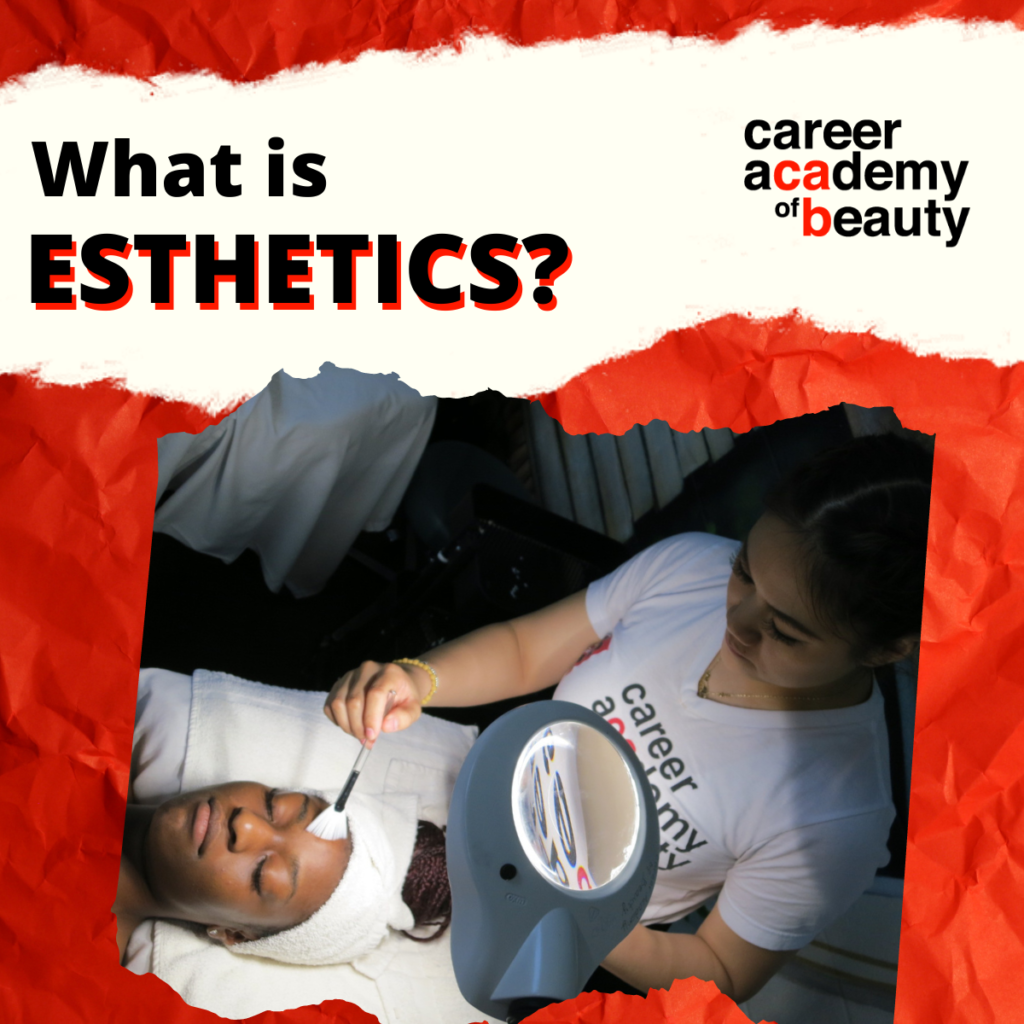
Esthetics is the part of the beauty industry focused on skincare services that support the health and appearance of the skin. If you have ever had a spa facial or cosmetic skincare treatment, chances are you have received a service from an esthetician. Estheticians specialize in services such as skin analysis, facials, peels, waxing, makeup application, and skincare recommendations.
If you have a passion for helping others feel good and you love all things beauty, our esthetician program at Career Academy of Beauty can help you build the knowledge and hands-on skills used in this field.
What is esthetics?
Esthetics is part of the beauty industry, but it is also closely connected to health and wellness. The appearance of the skin can be influenced by many factors, which is why estheticians learn how to evaluate the skin and provide services based on a client’s individual needs and goals.
Estheticians work at the intersection of skincare and beauty. Depending on their license, work environment, and scope of practice, they may perform facials, masks, peels, waxing, makeup application, and other skincare services.
Esthetics also changes as new products, techniques, and beauty trends emerge. Because the field can include services such as eyebrow shaping and makeup application, estheticians may need to keep up with both skincare developments and changing beauty trends.
That combination of skincare knowledge, hands-on technique, and creativity is part of what makes esthetics appealing to people who enjoy several different sides of the beauty industry.
View this post on Instagram
What does an esthetician do?
An esthetician works with clients to understand their skin and provide skincare and beauty services within their licensed scope of practice. That can involve everything from analyzing a client’s skin to performing a facial or helping someone choose products for an at-home skincare routine.
Estheticians also need strong client-service skills. You may need to ask questions about a client’s skin concerns, explain what a service involves, recommend appropriate aftercare, and help clients set realistic expectations.
Some of the main areas you can study in esthetics include skin analysis, facials and peels, hair removal, makeup application, and skincare recommendations.
How Do Estheticians Analyze the Skin?
Skin analysis helps an esthetician better understand a client’s skin before recommending a service. Estheticians need to learn about the structure of the skin, different skin types, and common concerns that can affect how the skin looks and responds to products.
These concerns may include acne, scarring, rosacea, signs of aging, and sun damage. An esthetician also needs to understand when a concern may fall outside their scope of practice and require attention from a medical professional.
In esthetics school, you can learn how to assess and map the skin so you can make informed decisions about appropriate services and products. Because every client’s skin is different, understanding how the skin works is an important foundation for the rest of your education.
Skin analysis is also about communication. A good consultation gives you the chance to ask about a client’s current routine, sensitivities, concerns, and goals before beginning a service.
What Do Estheticians Learn About Facials and Peels?
Facials, masks, and peels are common esthetic services that focus on caring for the skin and improving its appearance. Depending on the service, they can involve cleansing, exfoliation, masks, moisturizers, serums, and other topical products.
These services may be offered in salons, spas, dermatology settings, cosmetic clinics, or med spas, depending on the esthetician’s role and legal scope of practice.
Learning the steps of a facial is only part of the process. Estheticians also need to understand why certain products or techniques may be appropriate for one client but not another. Skin type, sensitivities, current products, and client goals can all affect the service you choose.
That is why skincare theory and hands-on practice work together in esthetics education. You need to understand the skin before you can make thoughtful choices about how to care for it.
View this post on Instagram
How Does Hair Removal Fit Into Esthetics?
Hair removal is another important part of esthetics, particularly waxing. Proper waxing technique matters because incorrect application or removal can irritate or damage the skin.
During your education, you can learn about skin preparation, wax application, hair growth, sanitation, and aftercare. You also learn how to recognize situations where waxing may not be appropriate for a particular client.
Waxing can involve removing unwanted hair from areas such as the upper lip, face, or body. It can also involve more detailed shaping, especially around the brows.
Brow shaping brings some of the creative side of esthetics into the service. You are not simply removing hair. You are also considering balance, shape, and the look the client wants.
Do Estheticians Apply Makeup?
Yes. Makeup application is another area that can be included in esthetics.
Estheticians may apply makeup for everyday looks, special occasions, photography, or other beauty services. Makeup gives you the opportunity to combine technical knowledge with creativity, color, and an understanding of facial features.
If you already enjoy experimenting with makeup or finding ways to highlight different features, this can be an especially enjoyable part of your esthetics education.
It can also help you discover what parts of the beauty industry interest you most. Some students may be drawn mainly to skincare services, while others find that they also enjoy makeup, brows, or other creative services.
Why Do Estheticians Make Skincare Recommendations?
Professional skincare services are only one part of caring for the skin. What a client does at home can also play an important role in their skincare routine.
That is why estheticians need product knowledge as well as hands-on service skills. You may need to explain how a product is used, how often it should be used, and where it fits into a client’s existing routine.
The goal is not simply to recommend whatever product is available. You need to listen to the client, understand their concerns and preferences, and make recommendations that make sense for them.
Product recommendations can also be part of the business side of esthetics. In some work environments, estheticians may sell retail skincare products or earn commissions from product sales.
Understanding how to communicate about products in a helpful and professional way can therefore be useful both for client care and for working in the beauty industry.
View this post on Instagram
How Do You Get an Education in Esthetics?
If the field of esthetics is calling to you, the first step toward building your skills is attending an esthetics school like Career Academy of Beauty.
Our esthetician program begins with the fundamentals you need to understand the skin, products, sanitation, and professional services. As your education progresses, you can put that knowledge into practice through hands-on learning.
Our full-time esthetician program can be completed in as little as 4.5 months. We also offer part-time schedule options for students who need more flexibility.
Before choosing an esthetics school, it is a good idea to tour the campus and speak with the admissions team. A visit gives you the opportunity to see the learning environment, ask about schedules and enrollment requirements, and get a better idea of whether the school feels like the right fit for you.
You can also ask about tuition and financial options before making your decision. Financial Aid is available to those who qualify.
Why Is Hands-On Esthetics Training Important?
Hands-on learning gives you the opportunity to put skincare theory into practice.
You can read about skin analysis, facials, waxing, or makeup techniques, but performing those services requires another set of skills. You need to organize your workspace, communicate with a client, follow sanitation procedures, manage your time, and perform each step of the service correctly.
At Career Academy of Beauty, hands-on education is an important part of our esthetician program. Students can practice techniques as they build their skills and gain experience providing services under supervision.
Hands-on experience can also help you become more comfortable working with different people. No two clients are exactly alike, so practical learning gives you opportunities to apply what you know in different situations.
After completing the required education, the next step is to follow California’s licensing process and sit for the state exam. Receiving your license allows you to provide services that fall within an esthetician’s legal scope of practice.
Why study esthetics at Career Academy of Beauty?
At Career Academy of Beauty, our esthetics program combines skincare education, hands-on practice, and business training. You can learn skills such as skin analysis, facials, peels, waxing, makeup, and skincare recommendations while building experience through practical training. Our instructors bring decades of combined experience training beauty professionals, and we maintain relationships with salons and industry professionals throughout Orange County.
If you want to see what our esthetics program is like, touring our Garden Grove campus is a good place to start. You can meet our team, see the learning environment, and ask questions about schedules, admissions, tuition, and financial aid options.
Frequently asked questions
What should I look for when choosing an esthetics school?
Look at the curriculum, hands-on training, schedule options, tuition, and learning environment. Touring the campus can also help you decide whether the school feels like the right fit.
Why does business training matter for an esthetician?
Estheticians may need skills beyond providing services, including client communication, product sales, and marketing. Business training can help you better understand that side of the industry.
What happens after I finish esthetics school in California?
After completing your required education, you need to follow California’s licensing process and sit for the state exam.
How can I tell if esthetics is a good fit for me?
Esthetics may be a good fit if you enjoy skincare, beauty, hands-on learning, and working directly with people.
Do I have to know which area of esthetics I want to focus on before school?
No. Esthetics school introduces you to different services and skills, so you can discover what interests you as you learn.